Image Viewer
A built-in browser and fullscreen viewer for images on the SD card — starting with your OSD screenshots. Open it from Tools → Image Viewer.
Library
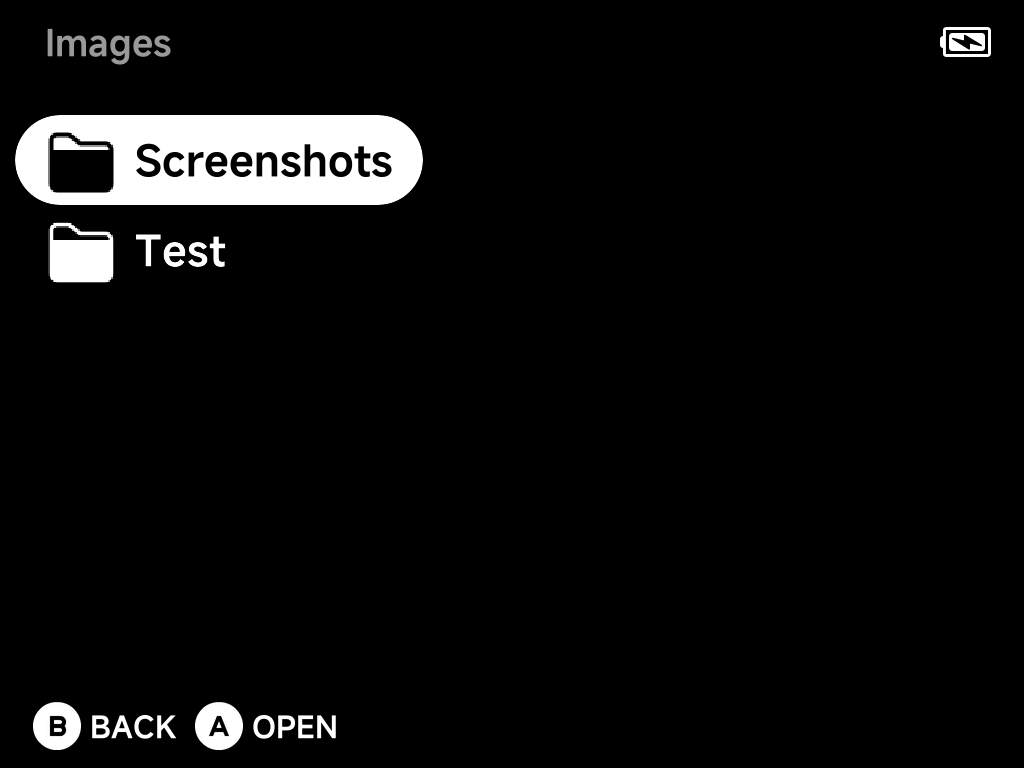
Image Viewer browses the Images folder on the SD card. Screenshots taken
with the OSD land in Images/Screenshots automatically,
and any other pictures you drop into Images (subfolders included) show up
here too.
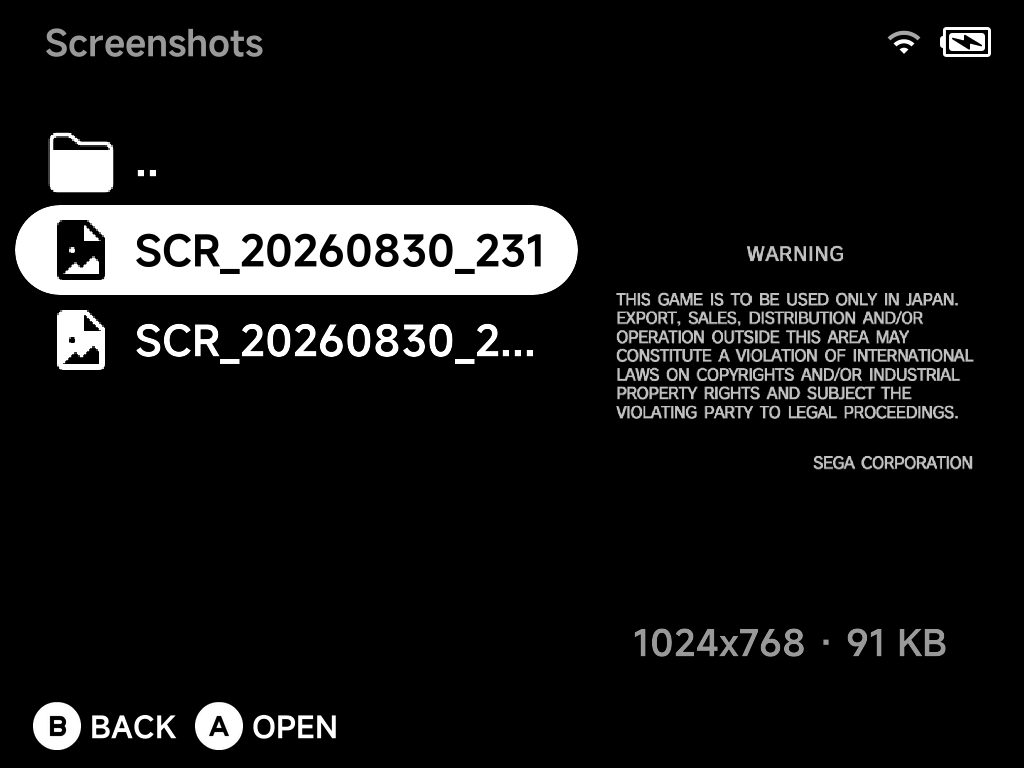
Folders show a folder icon, images a picture icon. Select an image to see a
live preview on the right, along with its resolution and file size (for
example 1024x768 · 91 KB).
Aopens a folder, or opens an image fullscreen.Bgoes up one folder — at theImagesroot, it exits the app.
Supported formats: png, jpg, jpeg, bmp, gif (animated GIFs show
their first frame only).
Viewing
Opening an image switches to a fullscreen viewer, fit to the screen by default:

| Button | At fit size | While zoomed in |
|---|---|---|
Left / Right |
Previous / next image in the folder (wraps around) | Pan |
Up / Down |
— | Pan |
R1 / L1 |
Zoom in / out | Zoom in / out |
A |
Toggle the info overlay | Toggle the info overlay |
B |
Back to the browser | Back to fit size, then back to the browser |
Zoom steps through fit → 100% → 200% → 400% (skipping 100% when the
image is already at or below screen size, since that step wouldn't
change anything). The info overlay shown above lists the file name,
resolution, zoom level and your position among the folder's images (e.g.
1 / 2).
Rename & Delete
Press MENU on a folder or image in the browser for its context menu:
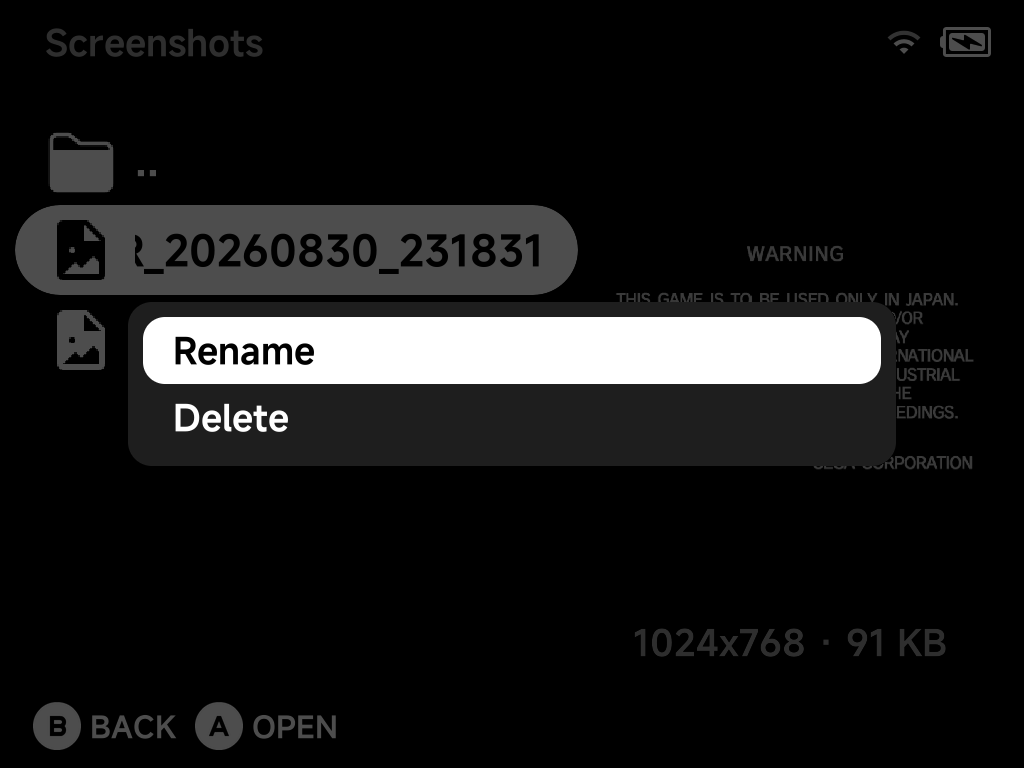
- Rename — opens the on-screen keyboard. The file's extension is kept automatically, so retyping it won't double it up, and a name already in use is refused.
- Delete — asks for confirmation first. Deleting a folder removes everything inside it, and the dialog warns you before it does.
Limits
Very large images are refused politely — anything over 32 MB or 40 megapixels shows an "Image too large" message instead of opening. A file that can't be decoded shows a "Couldn't load image" message.